- Do you need to be comfortable with computers?
- No. If you can fill in a spreadsheet, you can use the tool. The screens follow the vocabulary of clubs, not that of accountants.
- Our club is a non-profit — does the tool follow our obligations?
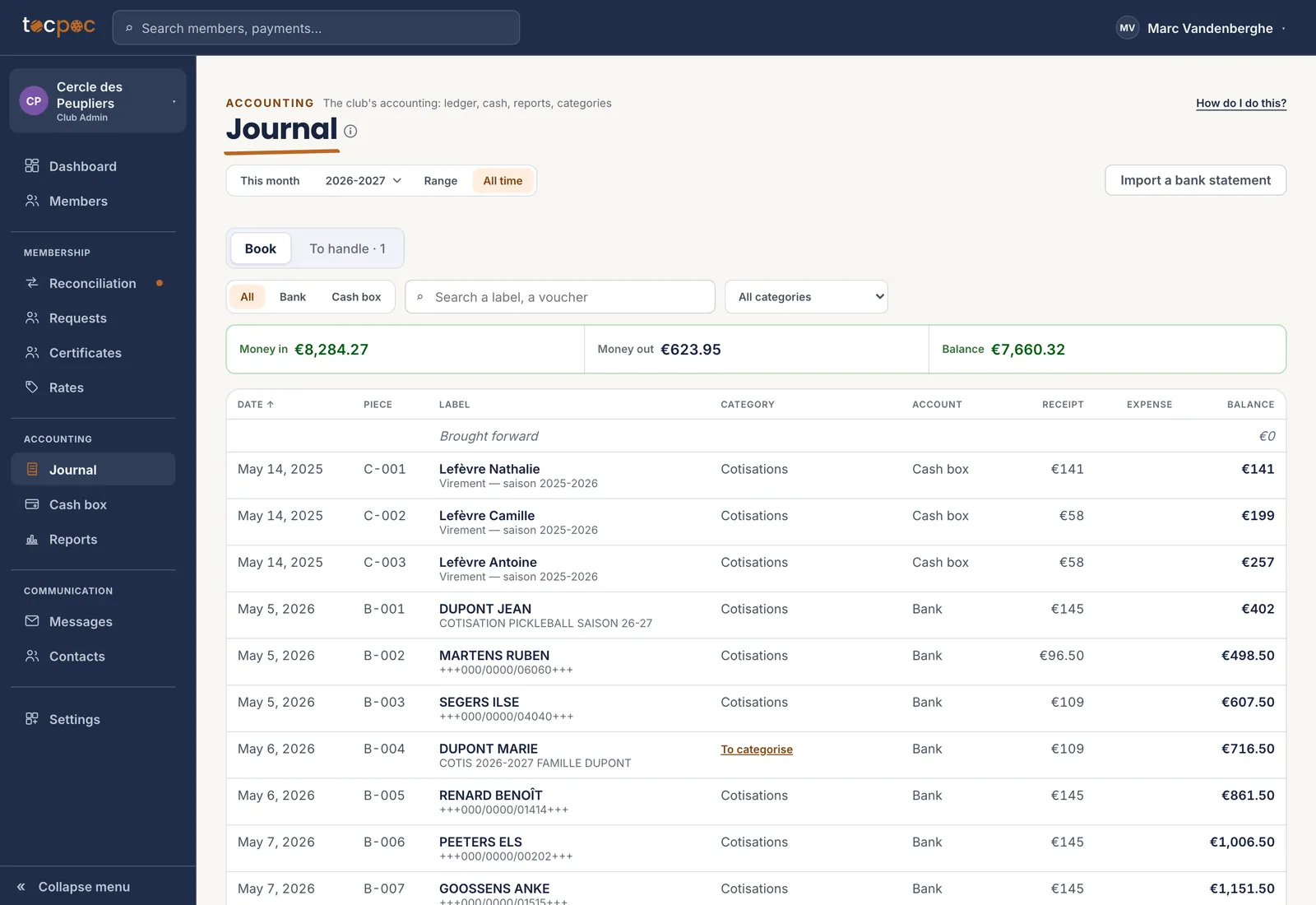
- The member list doubles as the register as long as it carries what the law requires and stays up to date, the accounts file every movement under a category, and the statement of income and expenditure exports for the general assembly. The subscription invoice is made out to the association, with its company number. The tool files nothing with the company register or the court registry, though: those steps stay yours. The yearly calendar, in detail.
- What about our member data?
- Hosted in Belgium, backed up every day, fully exportable at any time. You remain the owner of the file: if you leave, you leave with it. What the GDPR asks of a club.
- Do members have their own access?
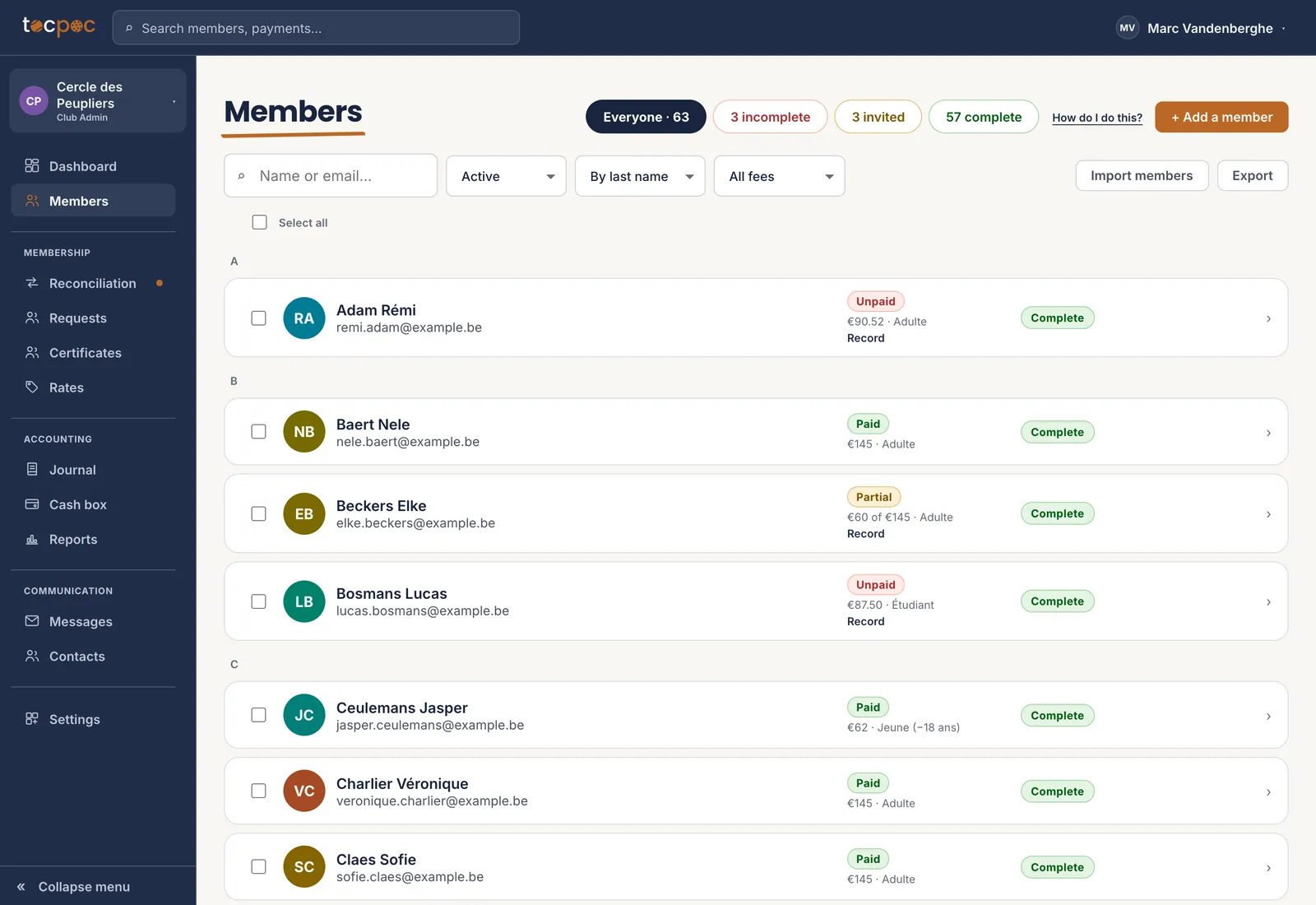
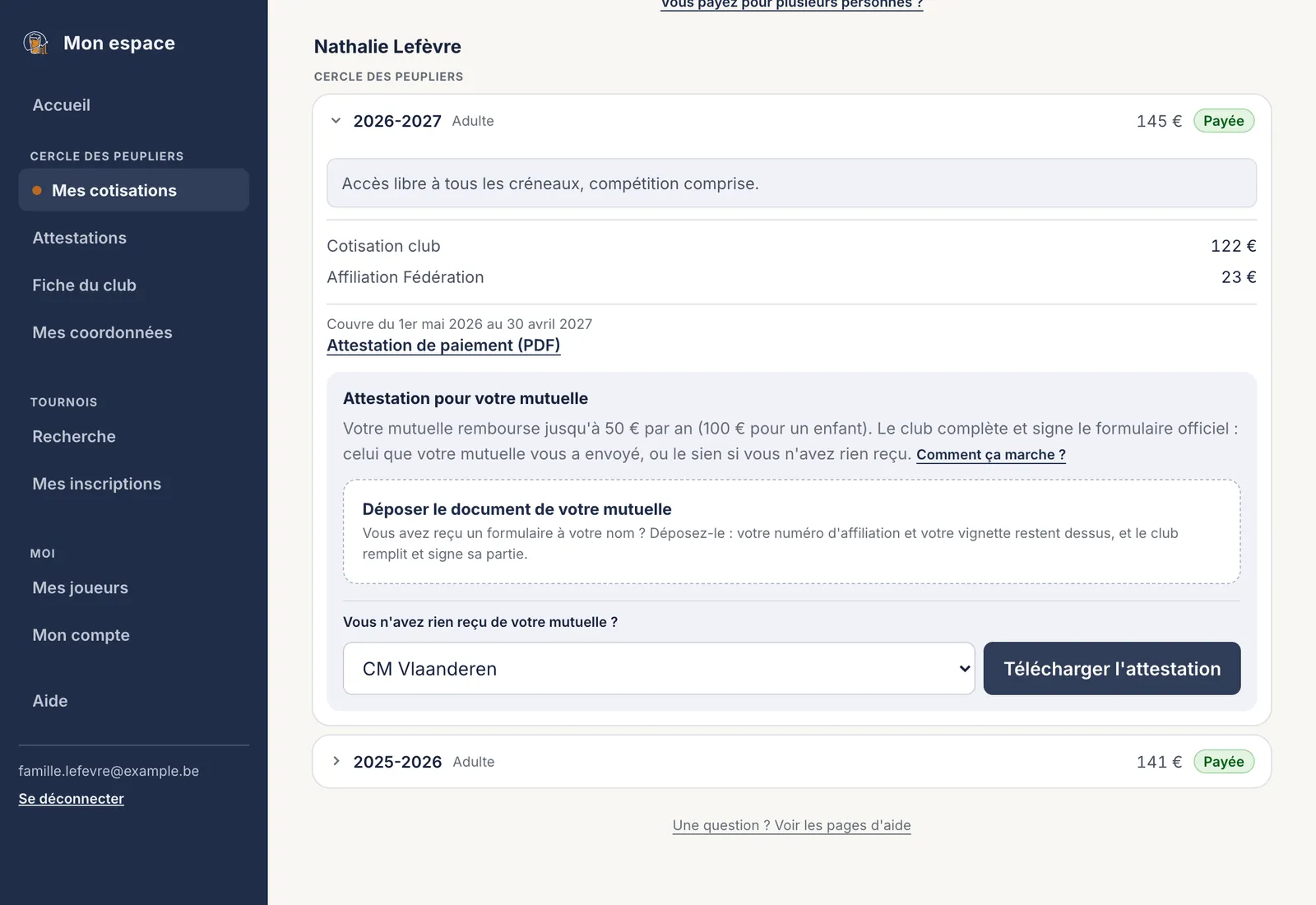
- Yes, each member has their own area: the history of their fees season by season, the reference to copy in order to pay, and their contact details, which they update themselves. That many fewer emails for the secretary.
- Can we run a tournament without taking the subscription?
- Yes. The tournament module can be taken on its own: it is paid on entries, 5% with a €1 minimum per place, online or at the counter. A place is one player in one event. A free tournament pays €1 per place, invoiced after the tournament, and Bancontact or card fees are borne by the club. What the module does.
- Is the health-fund sports form handled?
- It is generated from the member area, pre-filled with the club's details, the affiliation period and the amount paid. The member then sends it to their health fund without going through you.
- We already run the current season — can we switch?
- Yes, even mid-season. You import what exists along with the payments already collected, and you carry on where you were.
- Is the bank connected directly?
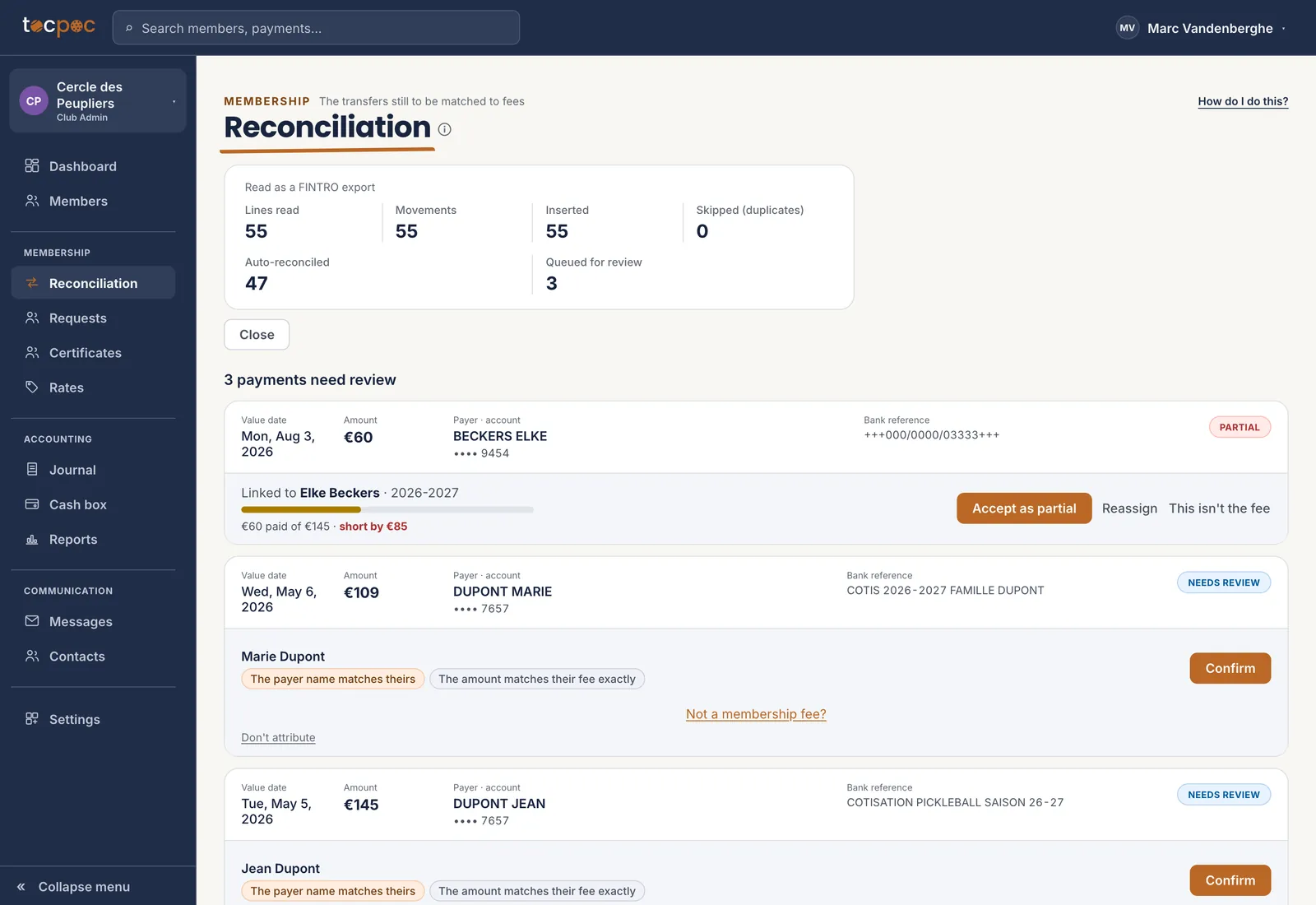
- No bank connection: you download the bank statement as CSV from your online banking, and you import it. No access to your accounts is requested. Fintro and ING statements are read directly; for another bank, send us an anonymised statement and we add it.
- What if we don’t want to import statements?
- Keep the bank by hand, like the cash box: date, amount, category. “Paid” settles a fee in one click, and money typed in under a member’s name offers their fee. If you import a statement later, the tool compares it with what you typed: a movement never counts twice. A club without an account collects in cash, and its fee requests say “pay at the club”.
- What is a structured communication, and do I have to create one?
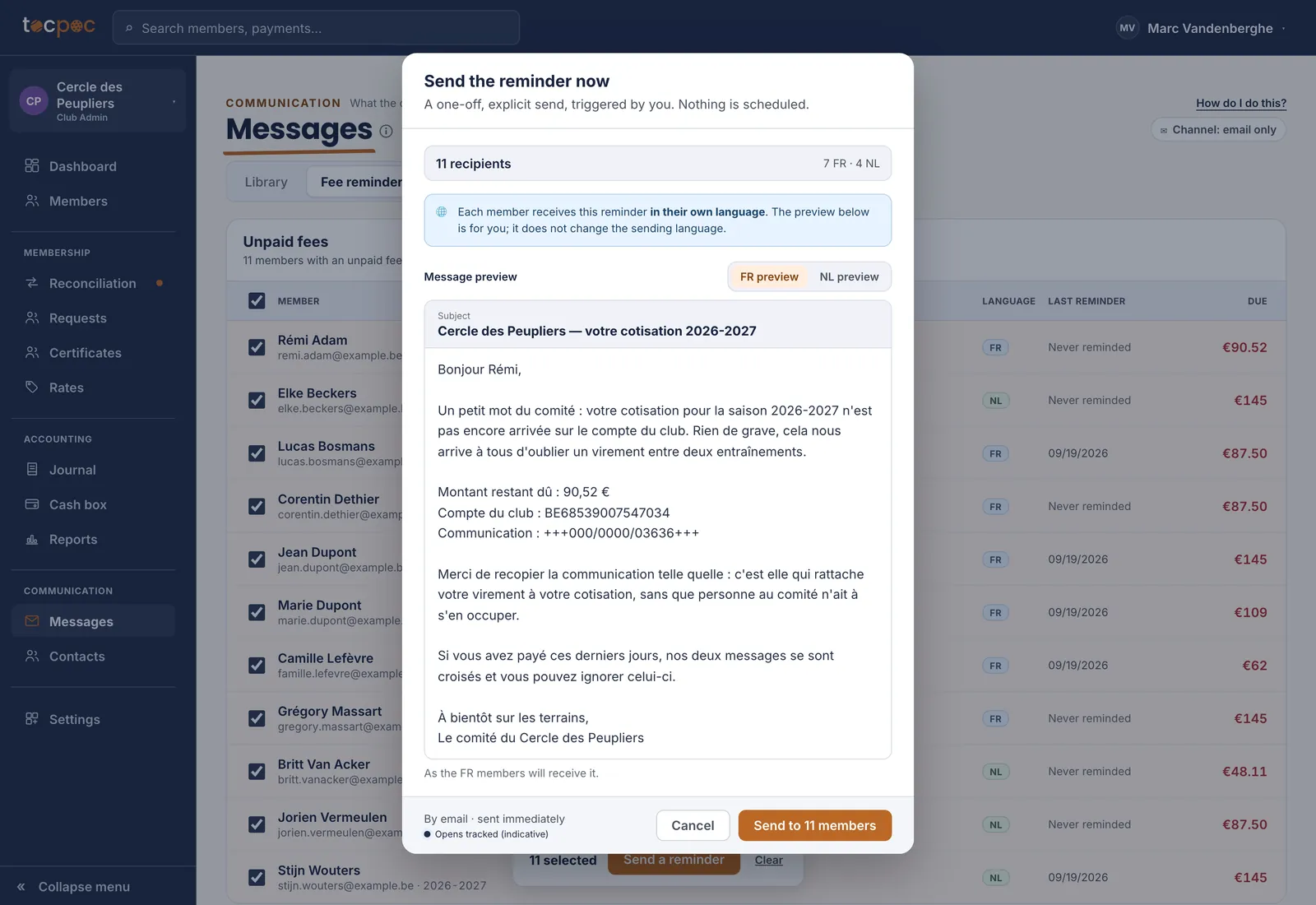
- It is the run of digits between +++ that your bank recognises. You calculate nothing: the tool assigns one to each fee, prints it on the message sent to the member, and reads it back when the account statement is imported. It is what makes a transfer file itself.
- How many volunteers can have access?
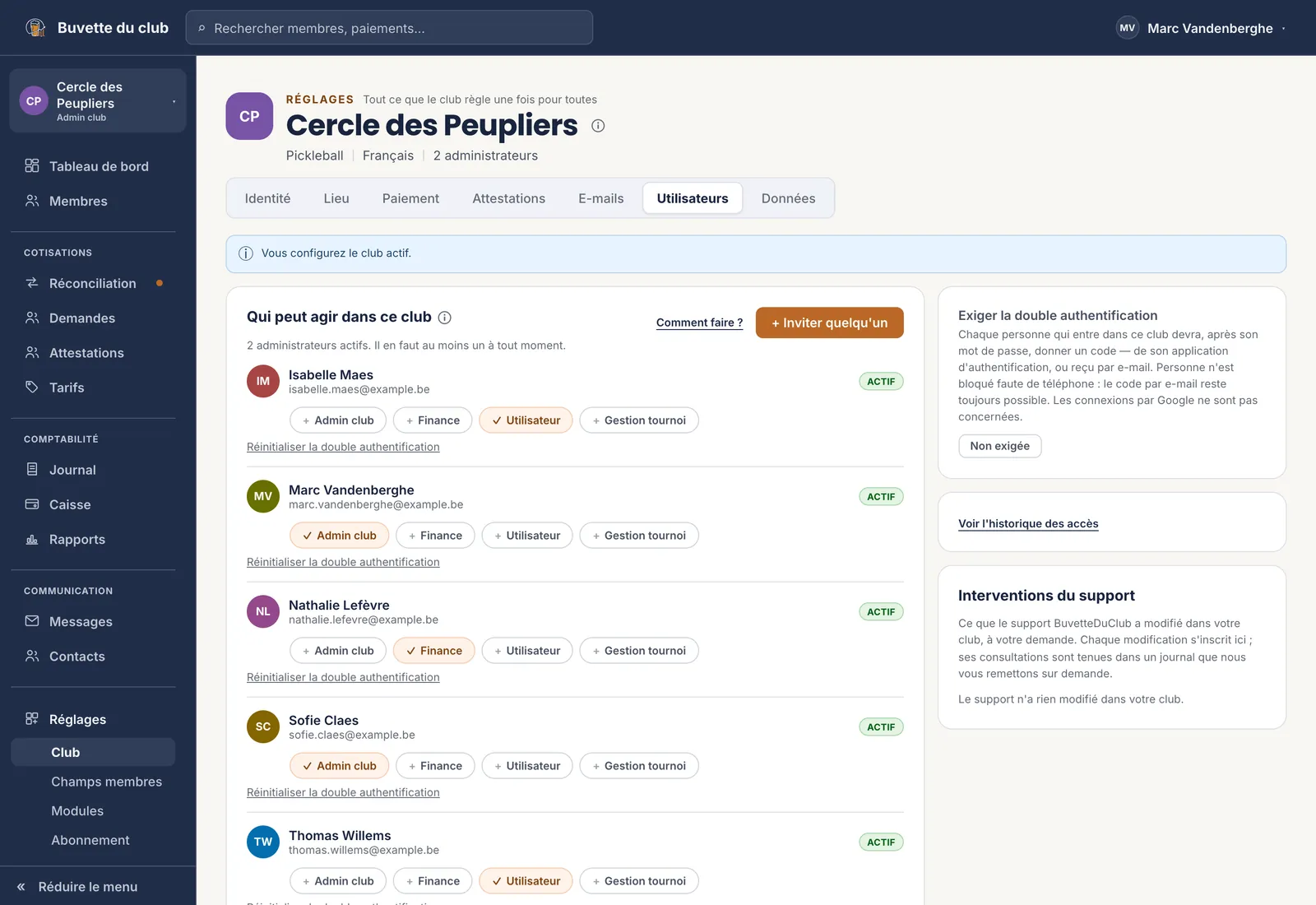
- As many as you like: accounts are not billed. Each with their own rights — a volunteer who looks up the member list cannot touch the finances.
- What if a password leaks?
- Every volunteer can add two-factor sign-in: a code shown by an app on their phone, or sent by e-mail. The club can also require it of its whole committee. Nobody is locked out for want of a smartphone — the code by e-mail is always available, including to someone who left the app at home.
- What happens at the end of the trial?
- Two limits, and they do not stop in the same place. When the trial’s number of fees is reached, you can no longer attribute new ones and everything else carries on. When the trial’s period is over, the club moves to the free Tournaments formula: its tournaments carry on, but fees and accounting can no longer be changed. In both cases, your screens, your history and your exports stay accessible.